My heart has only ever felt that something is missing twice so far in my life.
The first time was in 2018, when lying in bed, trying to fall asleep and fighting a variety of mental health difficulties smothered beneath dance and school work; I felt a physical pain in my chest of a need to talk about reading. I’d never felt anything so strong that it brought me to tears. Barely sixteen, I was desperate to talk about the books I was reading. I didn’t even know that there was a corner of the internet called Bookstagram. I came up with my first handle, “thebookielife” and with barely any hesitation, opened up my Bookstagram account and began sharing real, unedited pictures and thoughts of my reading journey. Of course, it didn’t take long for it to become a more curated and “aesthethic” page. The journey that I’ve been on since then has been colossal, teaching me so much about the book community. But that’s for another post.
The second time my heart yearned for something was in 2020. My family were driving through some mountains in France the summer before and a character came into my mind. I quickly wrote a scene with her, and the girl lived with me for a few months. It wasn’t until the first lockdowns, when all my exams were cancelled and I had nothing to do that, on a whim, I decided to explore that character again and just see if I could write a book.
I’d never successfully finished anything before. I’d started many a novel on Wattpad and in various notebooks growing up, but in April 2020, I decided that this was it. I was going to write a book. Maybe publish it. Maybe not.
As soon as the characters and the world began flowing, writing attached itself to me like a barnacle. I couldn’t shake it loose. The story completely flowed out of me.
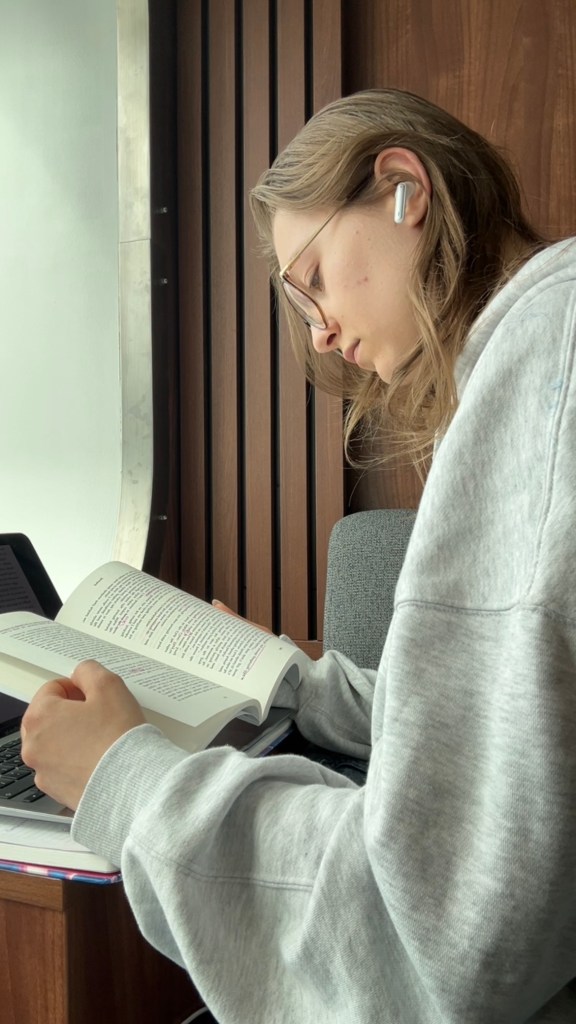
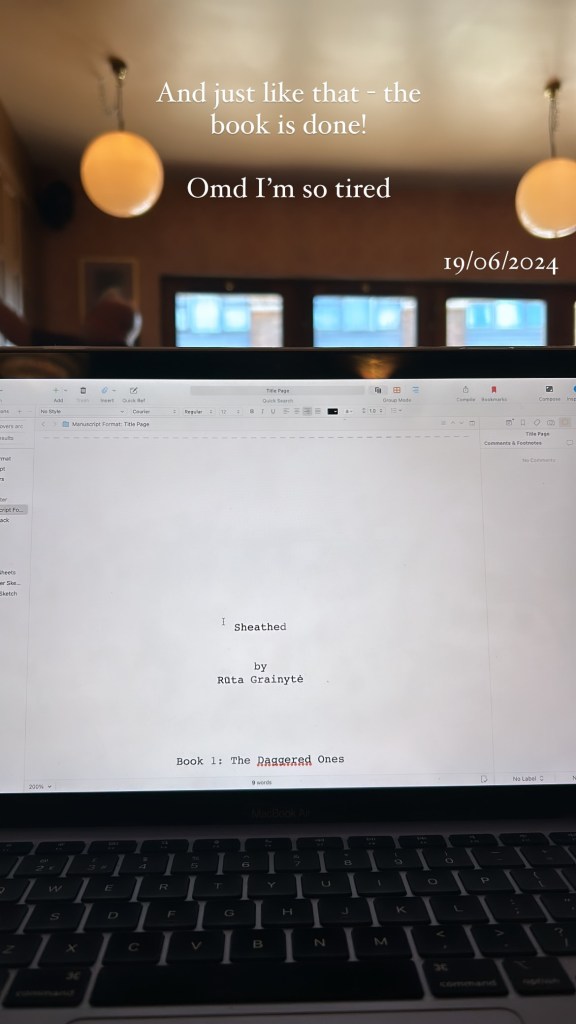
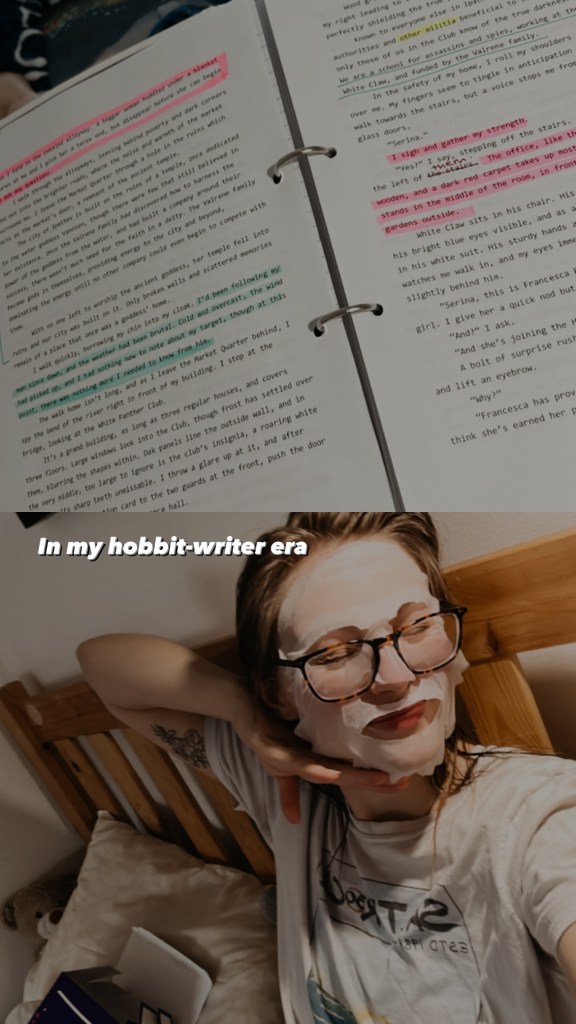
I knew nothing of plotting, character development or world-building. All I knew was the books I’d read, the love I had for literature. All I knew was that this story had to be written. During lockdown it became my full-time job. I went to university, but the story didn’t die. In November (Bonfire Night, coincidentally!), I sat on my tiny bedroom floor and with fireworks exploding outside my window, I typed The End for the first time. The joy was immense and I’d never felt more proud of myself.
Writing became a drug, and all of a sudden, I saw stories everywhere. They kept popping up from random conversations, random images and moments.
So since then, I haven’t stopped writing or dreaming. Life got busier and at times my writing did have to take a back seat. Never has it been so on the backburner as it is now, with a full-time job and relationships (not to mention a wedding to plan!), but my heart has continued burning for it.
As a creature of reflection, and with me hitting that five-year-milestone, I want to talk about five things these last few years have taught me. Because boy, oh boy, have I learnt some lessons.
1. Getting started is the hardest bit.
Well — that one does have a little lie attached to it. Getting started is not the only hard bit of writing. The entire process of putting a novel together is back-breaking, exhausting work, but those first words, for me, are the worst. Even now, I have a third book planned and ready to go, but I can’t start writing it because the fear of the blank page is real.
But once you take that leap and just write, knowing ultimately it’s not permanent, and once the words start flowing (and it might take a few sentences, or even a few drafts), there truly is nothing more freeing.
I have a love-hate relationship with new projects. I hate thinking about the logistics of the beginning: where do I start, how do I start, what is the first impression I want to put on my reader; but I adore the passion and excitement of a first draft. Getting to explore the new journeys of characters and see who they are, see what the world is like, is brilliant. It feels like falling in love. Everything is new and exciting, and you have these rose-coloured glasses on that make you think you’re the best writer in all existence and nobody has ever written anything like this before.
However…
2. Nothing is original.
Oof. This was a hard truth to learn. At school, I learnt about the theory of intertextuality. Essentially, everything has already been written. We’re just borrowing ideas, phrases, vibes from everything we have ever consumed. There is no original thought.
When I first realised this about my own writing, it was a tricky pill to swallow. I’d spent a year and a half writing this book and I really thought I had something new on my hands, something I’d never read before. But if you come to terms with the theory of intertextuality and understand that your “lack of originality” isn’t a bad thing, it helps you move forward, and actually, become a better writer. When I realised that I was subconsciously learning from the books I read, I began to read and consume better literature. I began to think critically about what I was reading. What did I like? What worked in this story? Why did I like this character — what in their character arc made me want to follow their journey?
The idea of intertextuality made me a more confident writer because I suddenly had a galaxy of already written and proven to be done well examples of writing!
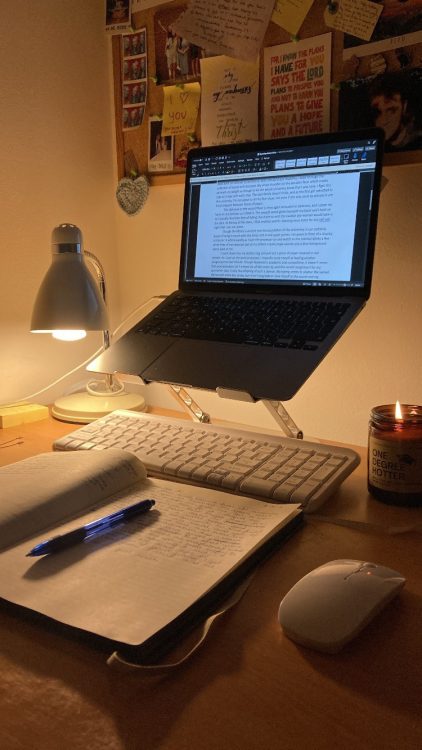
3. Perseverance is what will make or break you.
I’ve never really been good at sticking with things. Some things, once I start, I’m never getting off that train. For example, ballet and my love for chocolate. You couldn’t rip those things out of my cold, dead hands.
But other things, like keeping my room organised, or drinking enough water, I find so difficult to stay on top of. I had a real lack of perseverance, motivation. You could call it laziness, but in book writing, it wasn’t laziness that meant I never finished writing one.
It was the fact that I didn’t know how to push through the mental battles of writers block, doubt, fatigue, boredom. Writing, I’ve noticed, is a mental sport. Your body doesn’t really take a beating from writing the book, but damn, do your brain and your emotions.
The amount of Imposter Syndrome I’ve had over the last five years is insane. The number of times I’ve wanted to just give up and not finish. But that strange fire that burned in my chest of proving myself wrong — that I actually could finish a book — meant that I had to learn to suck up those emotions and get on with it.
Whenever the trials of life seemed to get bigger, I made sure that my writing still stayed afloat. Maybe I didn’t write everyday, but I thought about it. I kept my stories and characters alive in my head. I wasn’t about to fail myself. Because how embarrassing would that be, to have told so many people that I wrote a book, and then not only to never publish it, but actually admit that I never finished it? No, thank you. I was going to get on with it.
This kind of mental strength and resilience I had to build up against my own doubts and insecurities has filtered through into other areas of my life. I seem to handle stress and overwhelming situations a little more easily (though still not perfectly!).
It’s a skill that has meant I have written two full-length books, polished them to the best of my abilities, written a novella, and am ready to keep writing. It’s hard to keep it up, but I know why I write. And I know I’m not going to let a few dark thoughts get in the way.
I would not be the person I am without my perseverance.
4. Writing is a mirror.
2020 Rūta is not the same as 2025 Rūta. In many ways, I have stayed the same, thank goodness. I would hate to lose the parts I love most about myself.
But, giving myself time to delve into different memories and own personal experiences has forced me to grow. It’s forced me to look deep into my heart and think about who I am, and why I am that way. I’ve been forced to shed a light on the darkest corners of myself. Some of those things I love, and have easily given to my characters. Other things and experiences, were a little trickier to explore.
One thing I vividly remember from writing my first book, Chosen Anchors, was the full blown grief I had for a friend that had died six years prior. We hadn’t been close, but had known of each other and seen each other a few times throughout our lives. His premature death was a shock, and fourteen-year-old me didn’t really know how to deal with it. It wasn’t until I was writing the death of a character that I tapped into the single death I’d experienced.
And geez. The grief was real. It was hard. It was needed. I don’t want it to sound like the only reason I thought of him was to help my writing, but the experience and emotion influenced my writing. Those moments of that story were real, from my heart. Reading them back when editing was hard, because it wasn’t just the fictional characters who were mourning a fictional loss, it was me, my soul bleeding through the words, seeking an escape for something I hadn’t known how to do for years. It was liberating.
Now, every experience I have, whether good or bad, I try to record it into my brain. It makes me aware and reflective of myself, and means I can try to write more grounded and relatable characters and moments. Above everything, I want my readers to find something in my stories that makes them clutch their chest because something pierces through them. That is my aim. To touch hearts and make people think.
Writing is a mirror. It is a mirror of my soul, it is a mirror of the world and its politics, it is a mirror of the God I serve and live for. I pray that everything I write reflects the God that became mortal and died for me, who loves me with everything He is, who is the only reason I write. I wouldn’t be able to do any of this without Jesus.
5. There is always more to do.
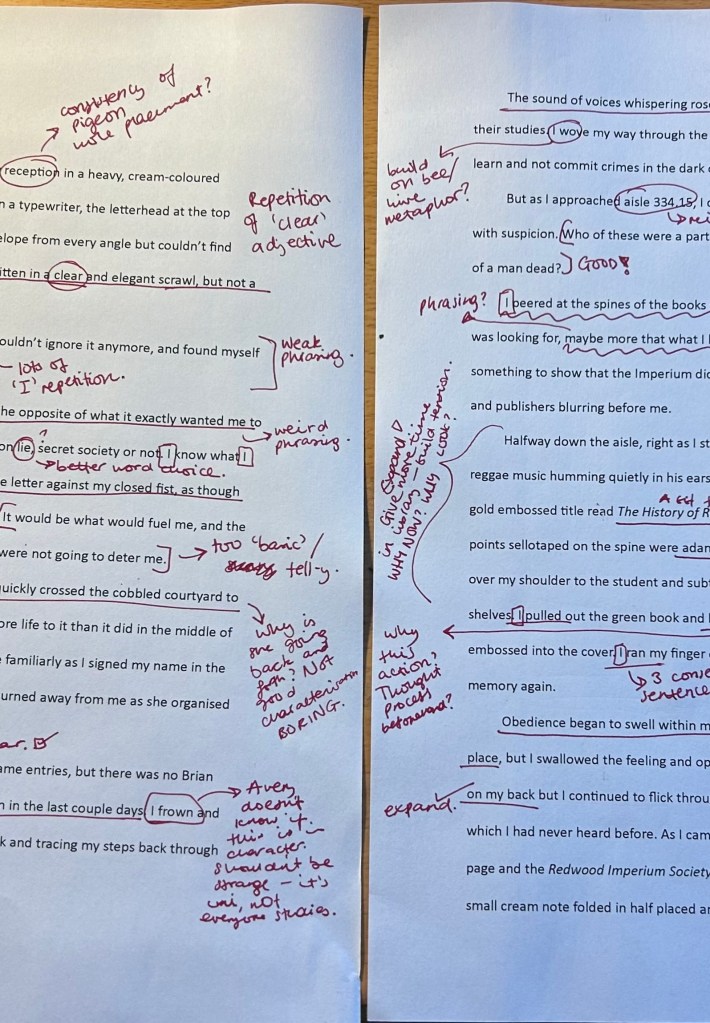
Sounds mean, but take it as encouragement! There’s always more stories to write. There’s always more learning to be done.
Similar to the idea of learning to persevere, knowing that there is always something more that I could do was a skill I’ve had to figure out. As a perfectionist, it can kill as easily as encourage. It is probably one of the main reasons I haven’t published yet, but had I just accepted my stories as they came, I wouldn’t have become as strong a writer as I am now.
But even having said that — there is still more to do. I am nowhere near the writer I want to be. I need to read more. I need to learn more. I need to write more.
Resources such as Brandon Sanderson’s lectures on YouTube were amazing when I first started writing, and I was fortunate enough to do a Masters in Creative Writing that continued to teach me what editing, planning and writing was like.
I learnt to not take things at face value. I pushed my stories just that little bit more — wrung everything I could out of them. And even then, when I’ve read it to an inch of its life, I bring in beta readers, professional editors, professors, and bite down my pride when they point out more things to improve.
It can be challenging to be told that something in your story doesn’t work, but the sooner you realise that your advisors are not out to harm you (if you chose wisely, of course) it will make you stronger.
These five years have absolutely flown by. In all honesty, I thought at this point of my life/writing career I would be a world-famous author with a three-book, six-figure deal under my belt, but I’m not. I’m still learning to write. And I’m so grateful for it!
The lessons I’m learning are simply the best — teaching me not just the sacred secrets of storytelling, but about life, God, and myself. I hope I never stop learning, in this, and in life. Because living is truly the greatest gift I’ve been given, and I can’t wait to immortalise my journey in the characters and worlds I create.
 Ruta Grainyte
Leave a comment